Our Community
Like most motorcycle enthusiasts, our members come from all walks of life. We love Harleys, Indians and all things American Made!
Since we were founded, we support our local businesses and centers of cultural heritage first.
We also embrace and support all those that have shown us courtesy, hospitality and kindness on the road through generations of our membership.
Thank you for your love, friendship and advocacy of Traditional Motorcycle Culture!
Proud Member of the Confederation of Clubs Southern California
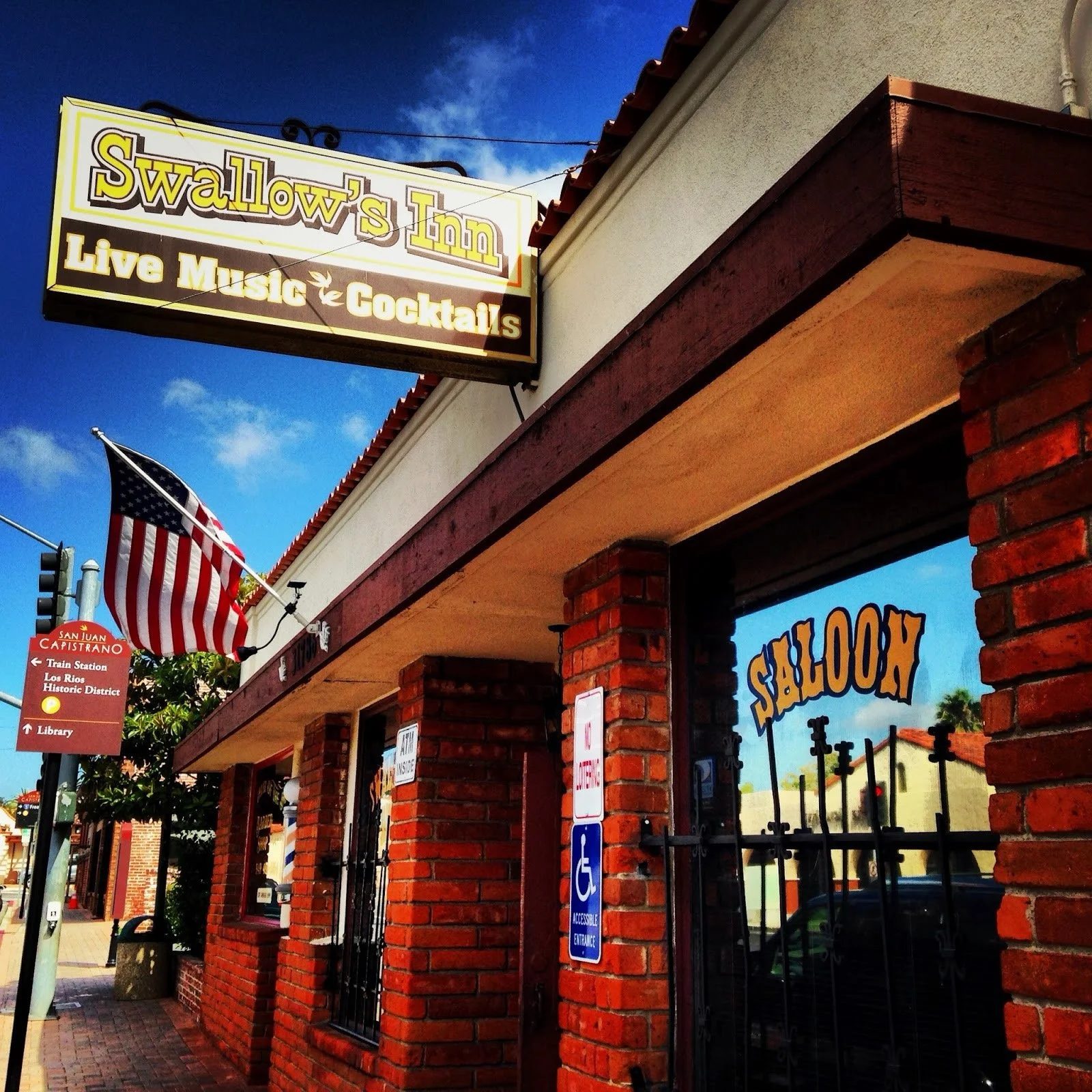
While tourists flock for miles to experience the wondrous annual migration of swallows to the San Juan Capistrano Mission, locals in the historic city escape religiously (and more frequently) to their own retreat: the Swallow’s Inn.
This little honky-tonk made headlines recently when one member of the city’s Fiesta Assn. suggested in a memo that the festival’s Hairiest Man Contest be relocated to a more “respectable” joint with higher standards. The author was forced to resign.
Since it opened in the late ‘20s as El Traguito (a Spanish play on words meaning both little swallow and little drink), the Swallow’s has known a devoted clientele of local ranchers and townsfolk. It got its present name when it changed hands in the mid-’50s. A decade later, it changed locations, across the road to its current address. It changed owners again in the mid-’70s and again two years ago.
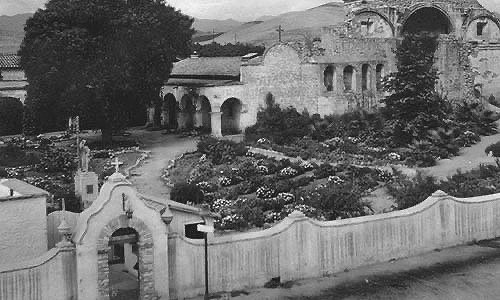
Mission San Juan Capistrano
The Heart of Our Town
Founded in 1776, Mission San Juan Capistrano remains the historic and cultural cornerstone of our city. The layout, character, and rhythm of modern San Juan Capistrano still reflect the original footprint and influence of the Mission. Its bells, gardens, and stone ruins are woven into the identity of this community—and into the story of our Club.
We are bikers. We are also fathers, sons, veterans, tradesmen, professionals, and neighbors. Among us are men of modern faith traditions and men who follow older spiritual paths rooted in the Creator and the ancient beliefs of Native peoples. History is rarely simple. It carries beauty, resilience, tragedy, and hard truths.
For some members of our community—particularly descendants of the Acjachemen and other Native peoples—the Mission represents both heritage and painful chapters of colonization and documented abuses that deserve acknowledgment. At the same time, many Native families today maintain deep personal connections to the Mission, having celebrated baptisms, weddings, and life milestones within its walls.
We do not attempt to resolve those complexities here. What we do believe is this: history should be understood, respected, and approached with humility.
You may see us on the Mission grounds from time to time—serving at community events, attending services, reflecting quietly in the gardens, or paying respects at the Historic Mission Cemetery. Regardless of individual perspectives, we stand for honoring family, faith, tradition, and local history.
It is not uncommon to see our motorcycles in formation escorting friends, family members, and elders to their final resting places along Ortega Highway or the I-5. When you see us ride in procession, know that we are doing our best to honor a life, a legacy, and this town we call home.
If you pass us on the road, a nod or a wave is always welcome.
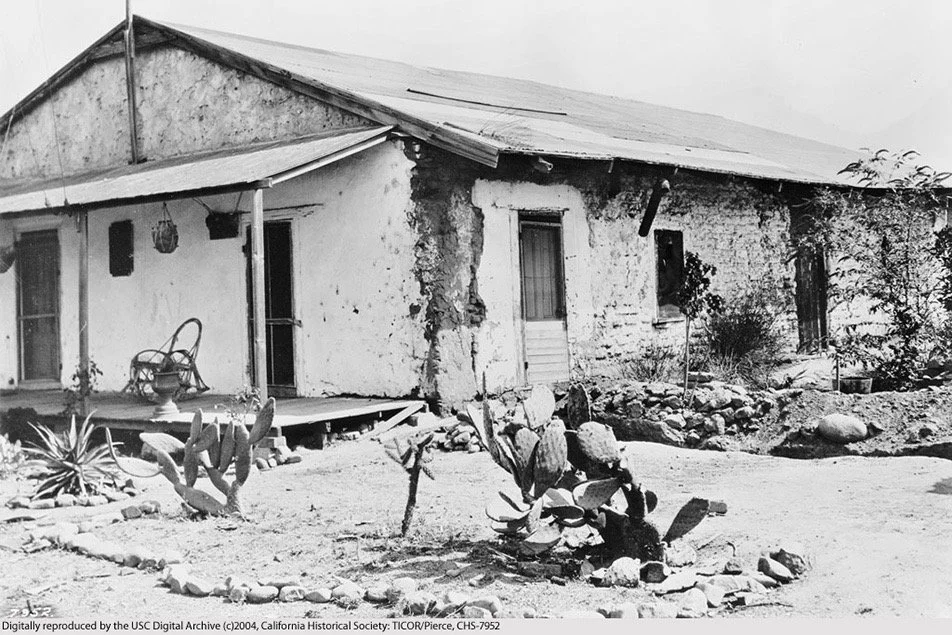
Blas Aguilar Adobe Museum and Acjachemen Cultural Center
In 1794, the Mission San Juan Capistrano built a number of adobes to house soldiers and the local Native Americans who worked at the mission.
Don Blas Aguilar purchased two of these adobes in 1845, which he named "La Hacienda Aguilar." The south wing adobe was called Casa Tejada; it unfortunately is no longer standing. The north wing adobe was called Casa de Esperanza, or "House of Hope." It still stands on the east side of the plaza.
Although once again renamed, now The Blas Aguilar Adobe, it is still the "House of Hope" because it is our goal to make it into a museum that will house artifacts reflecting the different period of San Juan Capistrano history and surrounding area, while accurately serving to educate it's visitors. We hope the Blas Aguilar Adobe, which once played a vital role in the founding and building of San Juan Capistrano's past, will now serve as an important learning tool for all to view this rich history.
The Blas Aguilar Adobe Museum is maintained and operated by the Blas Aguilar Adobe Foundation, a non- profit organization. The museum is located at 31806 El Camino Real, San Juan Capistrano, CA 92675. Call (949) 493-4933 for information on the museum's operating hours.
History written in the Hills
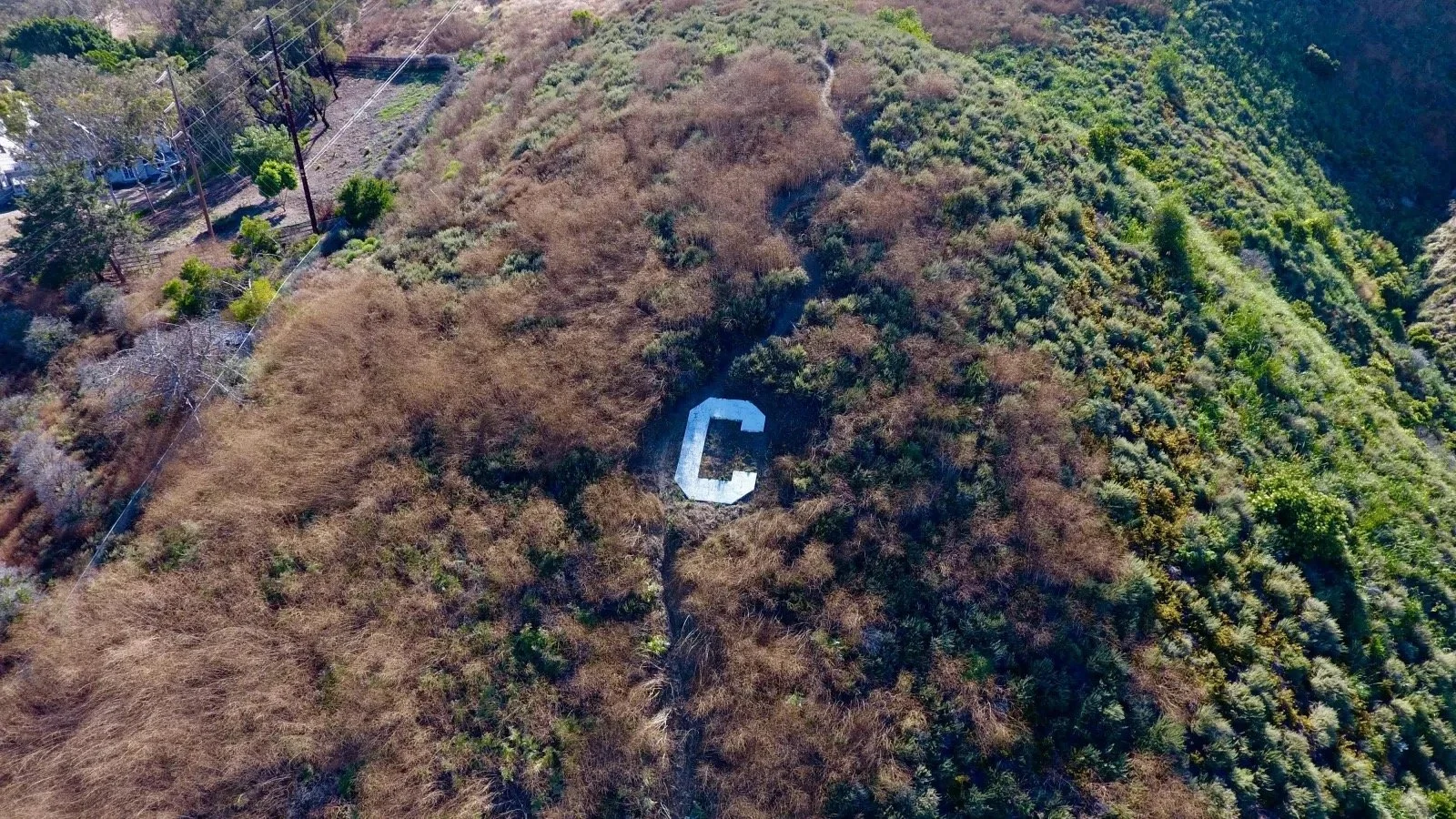
San Juan Capistrano Tourists who flock to the city from around the world to explore the town’s historic Spanish mission hardly give a second glance to a hill behind the mission and its big white C.
A wet winter so drenched San Juan that, in the spring, an overgrowth of weeds rendered the 26-foot-tall C invisible.
Recently, some members of the Capistrano Eagles motorcycle club decided it was time to show some local pride.
Louie Hernandez, Joe Lopez and Dee Nieblas approached the hill from behind the summit, in Laguna Niguel, hiking down to the C on a recon mission. When they returned a week later, they wielded machetes and small tools and began hacking away at the thick brush.
“You’ve got to kind of know where you are going to find the top of the C,” Lopez said.
He actually had a pretty good idea, since he and Nieblas grew up in San Juan and have explored the area. They are descendants of San Juan’s first people, the Acjachemen.
Although neither Lopez nor Nieblas is old enough to have attended Capistrano Union High School – the school for which the C stands – they knew the heritage of the C.
The history behind the landmark
The original C, made of wood and painted white, was placed on the hill “by the boys of the high school and Mr. Scheive in 1921,” according to Capo High’s first yearbook, The Chimes, published in 1924. That original C was replaced with one made of cement.
As a rite of initiation, freshmen at Capo High were ordered year after year by the senior class to hike up and clean the C. Pat Forster, Class of 1962, says the current C was placed there around 1950. Generations of students, alumni and community members have cleaned and visited this hillside marker.
For over 30 years it has also been quietly maintained at the end of each Summer by members of The Capistrano Eagles Motorcycle Club .